Showing posts with label #currentcharacters. Show all posts

Wednesday, March 22, 2023

Current Characters: Ulysses Rockford (Tiny Gunslingers)

Cover of Tiny Gunslingers RPG, featuring two gunfighter facing off in a dusty Old West street
Cover image via DriveThruRPG

Tiny d6 is a very simple system that has available variants for a whole lot of settings; it began with a D&D-alike (Tiny Dungeons) and has since expanded to cover a wide range of genres. Including Westerns, in the form of Tiny Gunslingers.

The base mechanic for Tiny d6 is very simple; for a Test you roll a 2d6 pool that counts 5s and 6s as successes, and one success is generally enough to get the desired result. If you're acting at a disadvantage, your pool is one die smaller, and if you're acting at advantage your pool is one die larger. That puts the your chance of success at approximately 33% with disadvantage, 56% without modifiers, and 72% with advantage.

Characters are distinguished from each other by Traits. Traits occupy a design space similar to Feats in contemporary D&D/Pathfinder or Edges in Savage Worlds; they're special abilities that (in most cases) either give you an advantage in certain situations (such as determining when another character is telling the truth) or allow you to do something other characters can't (such as providing skilled medical care). The game provides a list of Traits, and the players can come up with others as needed.

The Tiny Gunslingers game I'm currently playing in began with the PCs seeking shelter in a New Mexico cave, from a sudden storm, in the year 1870. Upon exiting the cave, they found themselves in the year 1874 of an alternate timeline, and have since encountered various other refugees from yet other (mostly similar) timelines. All this dimensional hopping is somehow connected to the machinations of supernatural entities, in whose schemes the player characters have, through their attempts to return home, become enmeshed.  

But that all came to light only after play began. We started by creating mundane humans for a fictional/historical Old West setting. And, like so many other players, I found inspiration in pop culture.
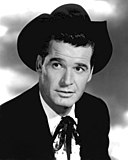
James Garner as Bret Maverick
James Garner as Bret Maverick (wikipedia)

I'm not a particularly big fan of the western genre, and I wasn't keen on playing Just Another Gunfighter. But I did have one promising role model: James Garner. As itinerant gambler Bret Maverick (and later as modern private eye Jim Rockford), Garner played a wily, charismatic, self-deprecating hero who preferred nonviolent resolutions but wasn't a fanatic about it. This was a frame I could happily build upon. As a tip of the hat to Garner I gave my hero the last name "Rockford;" to further emphasize his wiliness I added the first name "Ulysses." 

With a concept in hand I was ready to engage the character-building mechanics, which mostly involve selecting Traits. Our GM provided a customized list, which he had modified somewhat from the one the designers had included with the rulebook, so I'm going to mark those homebrew or imported Traits with an asterisk for the sake of clarity.

Beginning characters start with three Traits. Following the Bret Maverick template, I started with Gambler, which gives our hero advantage on Tests that involve games of chance or making bluffs. I also chose the converse Trait Insightful*, which provides advantage on Tests to discern others' truthfulness. As a plot hook generator, I ended with Nose for Trouble, which provides an extra starting point of Grit (about which see below), but which creates complications each time the character spends Grit. 

Although there are combat-specific Traits (which I ignored because "averse to violence"), general fighting ability is covered by Proficiencies, which cover three broad groups of weapons: Melee (knives, clubs, etc.), Light Ranged (pistols, basically), and Heavy Ranged (rilfes & shotguns). You can choose one, then select a more specific weapon within that group as your specialty (or Mastery). Figuring that Ulysses' most likely combat situations would occur over the card table, I chose the easily concealable Derringer as his mastered weapon, which meant of necessity that his Proficiency would cover Light Ranged weapons.

Grit is a metagame currency that can be spent to reroll a failed Test (at a cost of one point), for advantage in a Shootout or formal duel (1 or 2 points), or to evade an enemy's successful attack roll (3 points). The default starting value is 3; Nose for Trouble bumps that up to 4. Grit regenerates between sessions, but in the course of play it can only be regained by capturing or killing bad guys, thereby earning Bounty that converts to Grit at a 1:1 ratio.

Tiny Gunslingers uses Hit Points as an endurance meter for its characters; player characters begin with 6 HP, and when combat or other damage brings you to 0 HP the risk of death rears its ugly head.

After selecting Traits and Weapon Proficiencies, characters can then choose starting Gear. The game's unit of exchange is the handwavey dinero, and in the spirit of minimalist game design the lists of gear and prices are mostly suggestions and divided up into broad categories of scarcity and cost (common, uncommon, rare). There is a starter Cowpoke's Kit, a variation of which our gamemaster provided as the default gear selection--plus a weapon (2, with the GM's blessing). So Ulysses Rockford began his adventures in the Mythic West with a Traveler's Kit that included a bedroll and basic supplies (toiletries, change of underwear, that kind of thing) and two weapons: the aforementioned derringer and a basic revolver. (We assumed he also had a deck of cards, since it seemed like a common item and directly related to his profession.) Ammunition is not individually tracked; instead, characters make Tests after each altercation involving gunfire to see whether they've run out.

In addition, a player character is supposed to have a Profession, which functions as a sort of custom Trait. At character generation, we overlooked this aspect (as well as Drive, which follows), and the GM decided to have us backfill it a few sessions into the campaign. I decided that Gambler suited that slot just fine and selected an additional trait to fill out Ulysses' skill set:  Nimble Fingers, which provides advantage on Tests to pick locks or pockets or otherwise engage in acts of larceny that depend on small motor skills.

Drive is a short description of the character's overall approach to life and the problems it brings, and if we had addressed this at the time Ulysses Rockford's would probably be something like "Can't we talk this out first?"

So at the start of the campaign (and excluding both the Drive and the Profession that we retconned later on), the starting statblock for Ulysses Rockford look something like this:

Name: Ulysses Rockford

Grit: 4        HP: 6

Traits:

Gambler: gains Advantage on Tests involving bluffing or games of chance

Insightful*: gains Advantage on Tests to discern other characters' truthfulness

Nose for Trouble: gains an extra point of Grit, but whenever the character spends Grit something bad seems to happen in the vicinity--not necessarily to him, but around him, and not to his advantage

Gear: Traveler's kit (bedroll, basic necessities, deck of cards), derringer, revolver

We've been gaining new Traits after every three sessions played, and Ulysses has found himself developing some medical skills to deal with wounds, poisons, and so forth, so as of last week his statblock looks like this:

3D image of a white man in Western garb
generated on HeroForge

Name
: Ulysses Rockford

Grit: 4        HP: 6

Traits:

Gambler: gains advantage on Tests involving bluffing or games of chance

Insightful*: gains advantage on Tests to discern other characters' truthfulness

Nose for Trouble: gains an extra point of Grit, but whenever the character spends Grit something bad seems to happen in the vicinity--not necessarily to him, but around him, and not to his advantage

Nimble Fingers: gains advantage on Tests to open locks, pick pockets, or engage in other acts of larcenous manual dexterity

First Aid Specialist*: gain advantage on Tests to heal people, and can make such Tests as a non-action 

Sneaky: advantage on Tests to hide or move about undetected. If detected, can act first.

Healer**: can take an action and make a Test to heal another character for 2 HP, or possibly treat illness or poison

Gear: Traveler's kit (bedroll, basic necessities, deck of cards), derringer, revolver (His original derringer was damaged as fallout from Grit expenditure (see Nose for Trouble above), but he was finally able to replace it once the party reached an actual city after several sessions in the boonies.)

Note that it probably would have made more sense to take Healer before First Aid Specialist, and perhaps it should have been a prerequisite (though I suppose one could use it on oneself without the Healer/Doctor Trait).


**called "Doctor" in the original Tiny Gunslingers manuscript. 


Thursday, November 10, 2022

Current Characters: Flight Lt. Lucia "Starburst" Delanova (Cypher System, SF campaign)


generated on HeroForge

This character basically started with me misunderstanding the campaign premise. I knew we were playing Cypher System, which implied that we'd have access to some sort of extraordinary powers, and I knew it was going to be science fiction of some sort, with the PCs playing members of an exploration-ship crew. But at first I didn't read the tone correctly at all.

I kind of ran with the powers thing and found inspiration in the Princesses of Adventure Time. There were lots of great characters to draw from: Bubblegum, Marceline, Lumpy Space Princess, and so on, but I eventually settled on Flame Princess as my starting point. It can be fun to play an impulsive hothead (perhaps less so for the rest of the party, I admit), and it provided an obvious hook for powers. I gave her the very Adventure Time-y name "Princess Starburst" and assembled the description "an impulsive warrior who blazes with radiance." (We'll get into how this description is assembled below when we look at the mechanics.) So far, so good.

And then, as our Discord-chat Session Zero continued, it dawned on me that we were supposed to be much closer to the ground (with "the ground" being baseline realistic humans) than I had originally assumed. I'd been thinking a slightly more cartoony Guardians of the Galaxy; our GM was thinking something more like Stargate SG-1. Instead of junking my original concept completely, I decided I'd rather adapt it to the circumstances of the game. Cypher System characters tend to start out with fairly minor powers and scale up with experience; the impressive-sounding "Blazes With Radiance" focus begins with just enhanced vision and the equivalent of being able to cast a D&D 5e light spell. I figured cybernetic implants could handle that without toxic levels of handwavium, and new powers could be justified by upgraded hardware and whatever interventions the GM thought he needed to make it work in-setting. 

I probably could have kept her a princess--human space has room for a lot of different planetary governments--but I thought it would be more interesting to scale that back too and make her a spoiled, not-quite-delinquent rich kid whose parents sent her to a military academy as a socially acceptable substitute for reform school. As the players sorted out party roles, I jumped for the pilot's seat as the stereotypical job for an impulsive hothead, a wannabe fighter pilot trapped by her own indiscipline and bad attitude into flying space taxis (upgraded to more of a space Land Rover for the campaign, but the point still holds). That called for a new name, though, and I was kind of attached to "Starburst." Fortunately, nicknames and callsigns are things, and "Starburst" became my pilot's callsign. For her proper name, I followed the theme: a family name that began as "de la Nova" and eventually ran together as "Delanova," then the personal name "Lucia," and then as I filled in her background it eventually grew to "Maria Lucia Usha Delanova-Devi," youngest child of twelfth-generation vintner Lorenzo Delanova and his husband Arvind Devi; reluctant graduate of La Scuola di Sforza and less reluctant graduate of Fleet Academy; good enough to be commissioned a pilot but not quite good enough (or nearly disciplined enough) to fly the starfighters that dazzle her imagination.

So let's take a look at the mechanics behind FLTLT Delanova. A Cypher character is built from three parts: a descriptor, a type, and a focus. Each provides a set of mechanical widgets that (with a little customization) come together to form a player character.

Usually one begins with the Type, which corresponds roughly to character class in other class-and-level games. It's an organizing principle for your skill set and helps determine your role in the group of PCs, and it's the anchoring noun in your defining statement "I am an adjective noun who verbs." The game provides four Types for your consideration: the combat-focused Warrior, the skills-focused Explorer, the powers-focused Adept, and the socially-focused Speaker. Optionally, these can be fine-tuned with Flavors that let you dip into another specialization or go deep on your chosen skill set. As a wannabe fighter jockey with military training, I use Warrior as my base and add Technology flavoring to ensure I've got decent vehicle skills. 

So what do those choices give me? Your Type determines your starting Stat Pools, which are three reserves of points that you can spend to boost various types of thing-doing rolls. Your Might pool applies to tests of physical strength, endurance, and hardiness; your Speed pool to tests of reflexes, dexterity, or movement; and your Intellect pool to tests of cognition, willpower, knowledge, or other mental capabilities. A Warrior starts with 10 each in Might and Speed, 8 in Intellect, and six more to divide among the three pools; I divide them evenly for a 12-12-10 spread. In addition, for each Pool you have an Edge score--a discount on boosts (or Effort, to use the game term), which usually begins at 1 for a chosen Pool and 0 for the others. The Warrior can choose between Speed and Might for that initial point of Edge; I opt for Might here because (as noted below) I know I'll also get an opportunity to raise my Speed Edge later. 

Now I choose some Special Abilities from the Warrior options. I get four from a shortlist of 11 and choose Combat Prowess (melee) as a character who gets in more than her share of bar fights, Improved Edge (Speed), and Trained Without Armor (which gives me a level of Speed Defense) as a pilot who's used to functioning in lighter combat gear. That leaves one opening, which I leave for a choice from my Flavor options. Type also governs starting equipment, but I'll get back to that after I'm done with stats and abilities.

A Flavor choice simply expands your list of Special Ability options; I use my remaining slot on Tech Skills from the Technology list, which requires me to select two specialties. Piloting and vehicle driving are separate choices, so my path is clear, and I'll be the crew's all-purpose wheelwoman.

The next decision point is your Descriptor, the adjective in your defining statement. "Impulsive" is right there on the list, so no need to seek out a close match from several maybe options. I get two more points for my Speed Pool and a couple of Skills as well as an Inability. The skill trainings (each of which adds a level of success to appropriate thing-doing rolls) are in Initiative and a second level of Speed Defense, which means I'm more likely to act before other characters and I'm better at dodging attacks. The Inability is a lack of patience that penalizes any attempts to do something that requires discipline or willpower.

The third element, the verb element, is called a Focus, and mechanically it provides Special Abilities or skills. I found myself weighing "Bears a Halo of Fire" against "Blazes with Radiance;" the rules allow for custom Foci, but it seemed to me one of these would do what I wanted. The fire powers struck me as a little too much for what the campaign was about, also kind of dangerous in the enclosed environment of a small transport ship, so I opted for Blazes with Radiance. As I mentioned before, the entry-level powers for Blazes with Radiance are a form of enhanced vision called "Enlightened" and the ability to charge up small items so that they shed light ("Illuminating Touch"). Both potentially handy, but not super flashy, although there'll be more impressive stuff as I level up.

As a character in military service, Starburst gets to choose from a fairly narrow assortment of assigned gear. I forgo armor because of my speed defense, but I'll want to have some weapons when things get ugly planetside (or inside the ship, too, I guess). I take a standard issue pistol and combat knife and add a stun baton as a personal favorite. We each get a personal communicator, and I add a pair of aviator sunglasses to my everyday tank top/flight jacket/BDU pants/boots ensemble. I have open slots for four more inexpensive items that I'll probably choose as the campaign unfolds.

In addition, as part of the character's background we are supposed to establish existing connections with three other characters in the group. 

As of this post I've played the character in about 10-11 sessions and earned a couple of advancements. (Though not as many as I'd like, because XP can be spent for rerolls and I've had some bad dice luck in this campaign.) There are five types of character advancement in Cypher System, and in order to advance to the next level (or Tier) you must take one each of four different types. You can add points to your Stat Pools, raise one of your Edge scores, raise your Effort rating (which caps the number of Stat points you can spend on boosting any given roll), add or improve a skill training, or take another bonus such as adding an appropriate Special Ability or receiving a bonus on recovery rolls. So far I've added four points to my Stat Pools (two each to Speed and Intellect) and added Repair (Starships) to my skill list. 

In addition, I've picked up a Cypher (a piece of advanced technology) for future use (a quantity of antigravity varnish suitable for treating a medium-sized object), and the entire party was exposed to rift energy (a phenomenon particular to this setting), thereby acquiring extraordinary abilities beyond those granted by our Foci. (Starburst's energy type is Elemental, and it allows her to resist elemental-type attacks as well as add elemental riders to her own attacks. There's a separate (homebrew) experience track for improving one's rift powers.)


OK, so let's see a statblock:

Flight Lieutenant Maria Lucia Usha Delanova-Devi, FSAF (Federated Systems Alliance Fleet), is an Impulsive Technology Warrior who Blazes with Radiance

Tier: 1     Max Effort: 1   XP: 1 (9 spent on improvements)

Might Pool/Edge: 12/1     Speed Pool/Edge: 16/1     Intellect Pool/Edge: 12/0

Cypher Capacity: 2

Cyphers on Hand (1): level 3 levitation unguent

Special Abilities: Combat Prowess (melee), Improved Edge (Speed), Trained Without Armor, Tech Skills (piloting and driving), Enlightened (trained in sight perception), Illuminating Touch

Extra Special Abilities: Imbued with Elemental Rift Energy

    Resistance to elemental damage

    Asset* to overcome elemental attacks

    Power enhancement to attacks (option of fire, water, earth, or air)

Inability: Hindered in tasks requiring patience, willpower, or discipline

Specialized Skills (Speed): Speed Defense

Trained Skills (Speed): Initiative, Driving, Piloting, Repairing Starships

Trained Skills (Intellect): Perception (sight)

Equpiment: BDUs, flight jacket, medium blaster pistol, military knife, stun baton, aviator sunglasses, personal communicator


*In Cypher, an "asset" is a skill, power, item, or circumstance that can improve a roll result by one level, from a base level equaling d20 roll/3. So a single Asset can improve a roll of 10 from a level-3 result to a level-4 result, and a second Asset would boost that to a level-5 result (the equivalent of rolling 15-17 on the die).


2025 Character Creation Challenge, entries 23-27: The Terrier Company, for Holmes Basic D&D

source: RPGGeek.com Various events that we need not review here prevented me from finishing this challenge before the end of the month, but ...